


When should you replace your ceramic water filter candle?

Industrial Filtration Efficiency: Why Diatomaceous Earth Outperforms Synthetic Filter Aids
April 6, 2026
How to Source High-Purity Diatomaceous Earth for Insecticide Formulations
April 23, 2026Silent Failure of Ceramic Filter Candles
You set up the filter once. It works. You move on with your life.
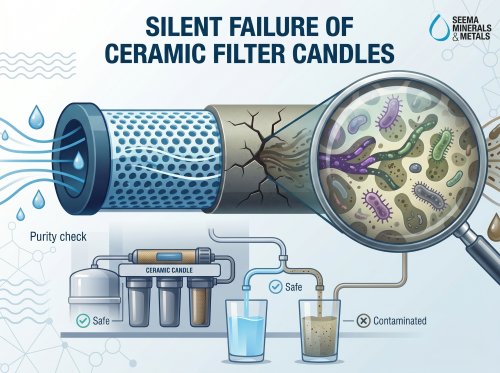
Months later, the water still looks the same. Maybe a little slower coming through, but not alarmingly. And you assume it's fine because nothing obvious has gone wrong.That assumption is the whole problem with Ceramic water filter candles they don’t break in a way you’d notice and a candle that’s past its life still lets water through. The water still looks clear. You'd have no reason to think anything was wrong unless you already knew what to look for.Quick version of how it works: water pushes through the wall of the ceramic candle, and the tiny holes in that wall catch bacteria and sediment. When the holes get clogged, flow slows down. When the candle cracks, water skips the wall entirely and comes through unfiltered. The flow can actually look normal with a crack, which is the scenario that worries me more.
When Slower Flow Signals a Bigger Problem
Start with the flow. Not slightly slow. Noticeably, frustratingly slower than a few months back. That usually means the pores are packed.
You can scrub the outside of the candle to fix this. A brush clears the surface and the water moves better again. This works, but there's a cost to it. The scrub takes off ceramic material. A thin layer, but it adds up. After six months of monthly scrubs the candle is measurably thinner than when you bought it. At some point, thin enough that the filtration is unreliable, and that point doesn't announce itself.
Other things worth acting on immediately: filtered water coming out cloudy. Taste or smell that's new. Any crack in the ceramic, hairline or bigger. Hold the candle against a bright light to check. If you see light coming through a line that shouldn't be there, it's done. No fix for a cracked candle.
Replacement Depends on Your Water
Six to twelve months is what you'll see quoted. That's roughly right if you're using clean tap water and filtering normal household amounts daily.
But in a lot of Indian cities, that's not the starting point. Water that comes through heavily loaded with sediment during monsoon months, or from an older building supply line, or in a hard water area, puts more through the ceramic per litre. The candle wears faster. Sometimes a lot faster.
Rather than counting months, look at the candle itself every three months or so. Check how the flow compares to when it was new. Feel whether the wall seems thinner. If something looks off, trust that. The calendar is the worst way to decide.
The Hidden Risk Inside Old Filter Candles
Most people think a tired candle just filters less well. That's not entirely accurate.
Bacteria trapped in the ceramic pores over months don't stay inert. They form a layer inside the material, biofilm it's called, and surface scrubbing doesn't remove it. Eventually a candle in this state isn't just filtering badly, it's contributing something to the water passing through it. The water looks fine coming out. It isn't.
For a healthy adult this might not cause anything obvious. For someone older, someone unwell, a young child, it's a different calculation. And the cruel part is it happens to people who were specifically trying to make their water safe.
Why Seema Minerals and not something cheaper
There are ceramic candles in this market at every price. Some of them are very cheap. The reason they're cheap matters.
The pore size in a ceramic filter candle is what does the actual work. Too wide and bacteria sail through. Too small and you're waiting so long for water that you stop using it. Getting that right takes consistency in the manufacturing process, not just decent raw material. Seema Minerals tests porosity on each production batch before anything leaves the facility. That's not universal in this industry.
Their candles also hold up across more cleaning cycles before the wall thins to an unsafe point. And they carry replacement sizes that fit the most common filter housings used in India, so you're not stuck replacing the whole unit when only the candle needs changing.
A Simple Habit That Keeps Water Safe
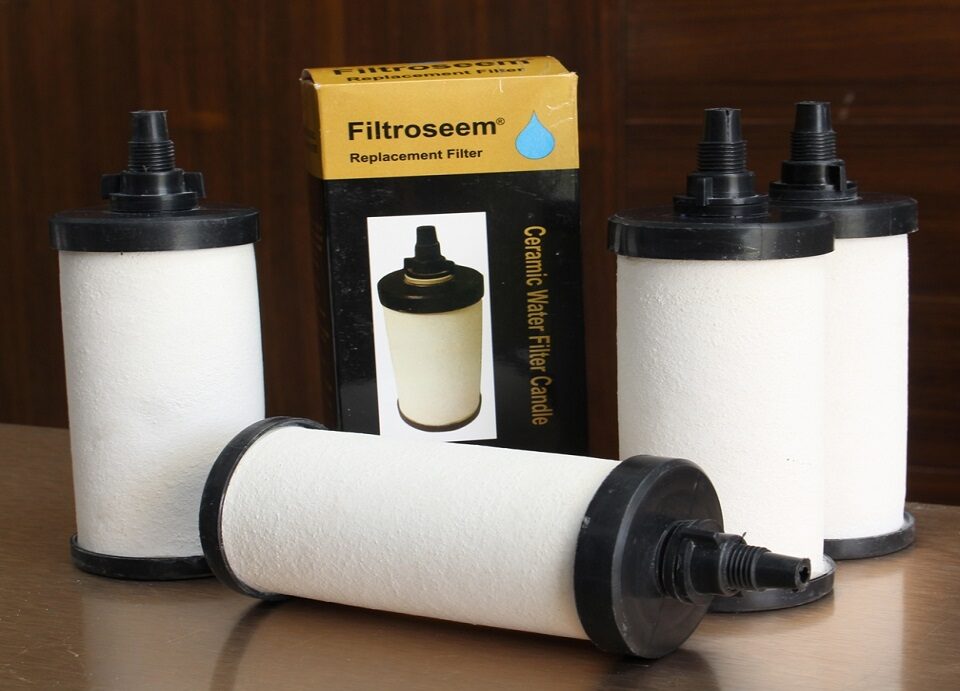
Pull the candle out every three months and actually look at it. Check the flow before and after Look for cracks under a bright light. If the wall looks thinner than when it came out of the box, replace it. Ceramic water filter candles should always be checked this way Waiting until something tastes wrong means you've already been drinking that water for a while Not a good system Seema Minerals has replacements in stock If you're not sure which candle fits your housing reach out and they'll sort it
Note : We recommend consulting a qualified specialist before attempting any actions independently.
Frequently Asked Questions
1How long does a ceramic water filter candle typically last?
Six months to a year in normal conditions. In turbid or hard water areas, or through heavy monsoon season use, three to four months is more realistic. Base it on what the candle looks like, not the date you installed it.
2Can I just keep cleaning it?
Up to a point. Scrubbing restores flow temporarily but removes ceramic each time. After enough cleans the wall is too thin to filter reliably. Cleaning buys time, it doesn't replace the candle indefinitely.
3The candle looks totally fine. Does it still need replacing after a year?
Probably yes. Biofilm forms inside the pores and doesn't come off with surface cleaning. A candle that looks undamaged can still be adding bacteria to your water after long use.
4Found a crack. What now?
Stop using it today. Water bypasses the ceramic through cracks and comes through completely unfiltered. There's no way to repair it.
5Does where I live actually change how often I need to replace it?
More than most people expect. High sediment, turbid water, bacterial load in the source — all of it accelerates wear. If your pre-filtered water is visibly murky, you're on a shorter cycle than the standard advice assumes.