


How Reactive Silica Protects Your Phosphoric Acid Plant from Fluorine Corrosion

Diatomaceous Earth: The Ancient Powder Everyone Is Using for Modern Problems
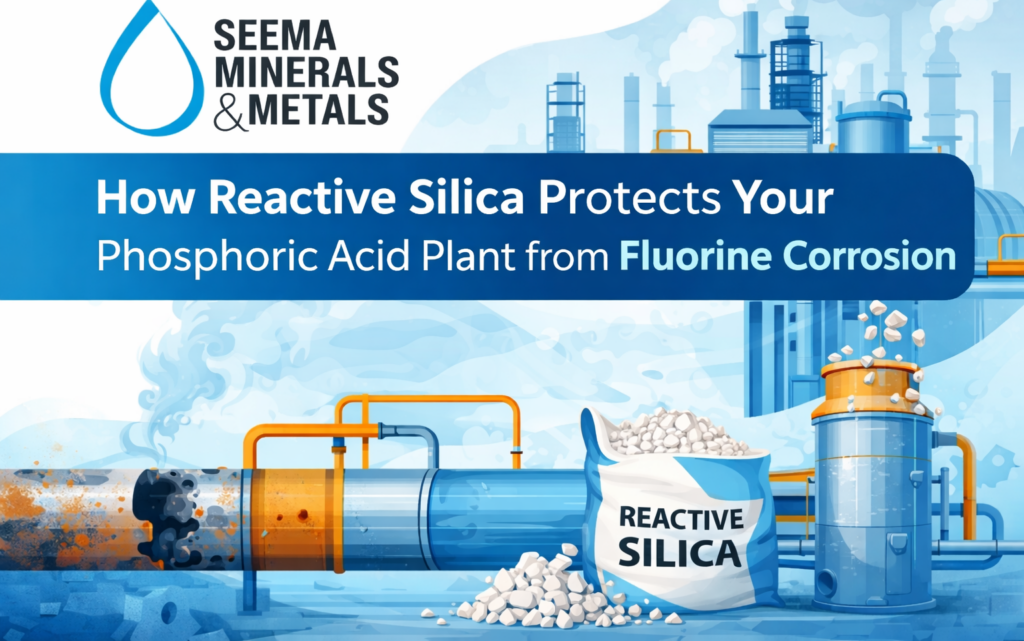
February 9, 2026Fluorine corrosion is one of the most damaging and expensive problems faced by phosphoric acid plant operators. The culprit is free hydrofluoric acid (HF), which forms during wet process phosphoric acid production when there is not enough active silica for phosphoric acid plant reactors to capture and neutralise it. When left unchecked, hydrofluoric acid corrodes reactors, evaporators, pipelines, and condensers, leading to unplanned shutdowns and heavy maintenance costs.
In this blog, we break down exactly how this process works, why it matters, and what to look for when sourcing reactive silica for your plant.
Understanding the Fluorine Problem in Phosphoric Acid Plants
In the wet process, rock phosphate is reacted with sulfuric acid to produce phosphoric acid. Rock phosphate naturally contains fluorine in the form of fluorapatite. When sulfuric acid attacks it, fluorine is released as HF gas. Under normal conditions, the reactive silica (SiO₂) naturally present in the rock phosphate captures this fluorine through a chemical reaction, forming silicon tetrafluoride (SiF₄) and eventually fluosilicic acid (H₂SiF₆), which is safely collected.
The problem arises when the SiO₂ content in the rock phosphate feed is too low. Many high-grade beneficiated ores are silica-deficient. With an inadequate silica to fluorine ratio, excess fluorine remains as free HF in the system and starts attacking plant equipment. This is precisely where externally added reactive silica becomes essential.
How Active Silica Neutralises Fluorine Corrosion
When rock phosphate with adequate silica content is processed, the silica present in the ore reacts naturally with the fluorine evolved during the sulfuric acid attack. The core chemical reaction is:
4HF + SiO₂ → SiF₄ + 2H₂O
The silicon tetrafluoride (SiF₄) produced then reacts further with water and more HF to form fluosilicic acid:
SiF₄ + 2HF + 2H₂O → H₂SiF₆ (Fluosilicic Acid)
Fluosilicic acid (H₂SiF₆) is a stable, manageable compound. It deposits in the plant's fuming chamber (scrubber/absorption system), where it can be periodically scraped, collected, and either disposed of safely or sold as a by-product which is used in water fluoridation and aluminium fluoride manufacturing.
Benefits of Using Active Silica in Your Phosphoric Acid Plant
- Reduced equipment corrosion: By eliminating HF, the service life of reactors, pipelines, evaporators, and condensers is significantly extended.
- Lower maintenance costs: Fewer corrosion-related repairs and replacements directly reduce operational expenditure.
- Fewer unplanned shutdowns: Corrosion damage is a leading cause of unexpected plant shutdowns. Reactive silica addition keeps your plant running more reliably.
- Environmental compliance: HF is a regulated air pollutant. Proper defluorination keeps your emissions within permissible limits.
- Fluorine by-product recovery: Fluosilicic acid collected from the scrubber can be sold as a commercial by-product, offsetting the cost of reactive silica addition.
- Improved worker safety: Lower free HF concentrations in the plant atmosphere reduce health risks to operators and maintenance staff.
Seema Minerals: Your Trusted Reactive Silica Supplier in India
Seema Minerals and Metals has been manufacturing and supplying active silica for phosphoric acid plants since 1975. With our own diatomaceous earth mining operations in Jaisalmer, Rajasthan and a processing plant in Udaipur, we offer a direct, uninterrupted supply chain with no middleman margins.
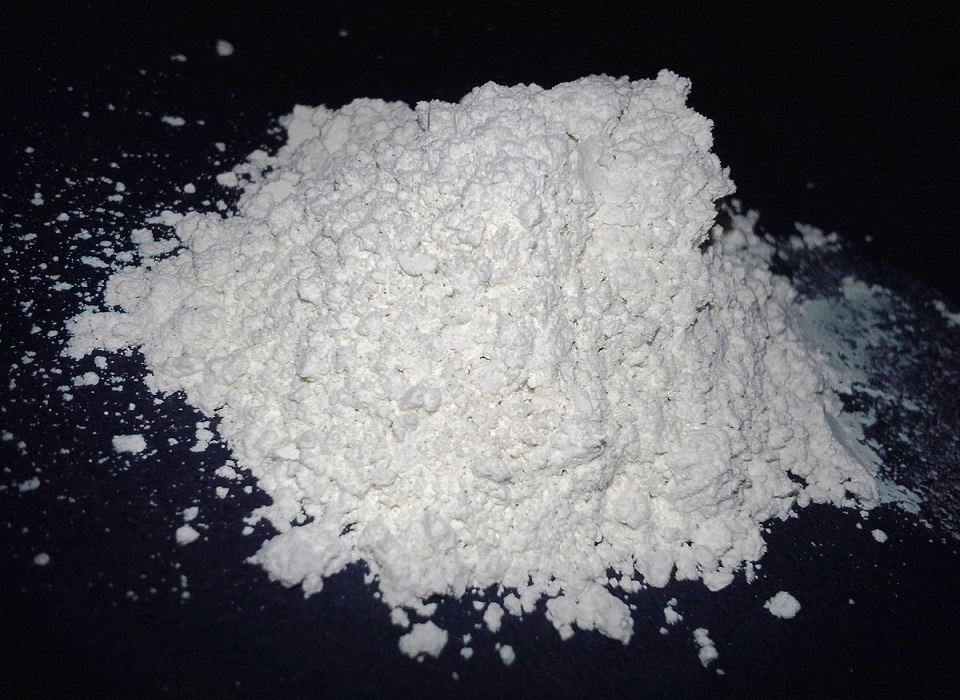
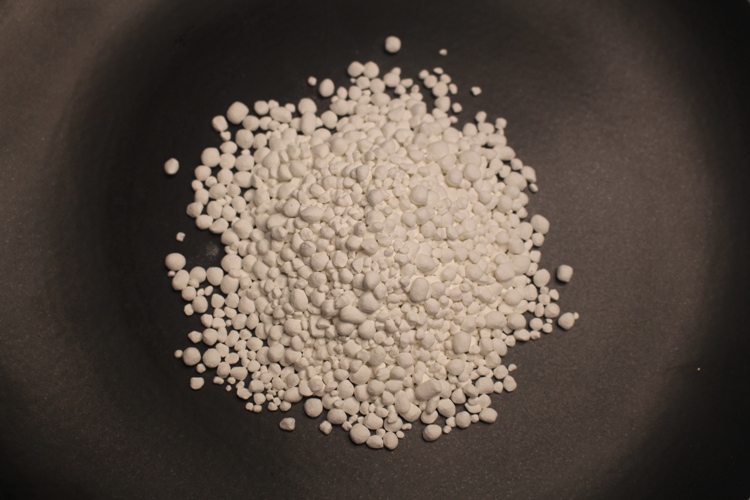
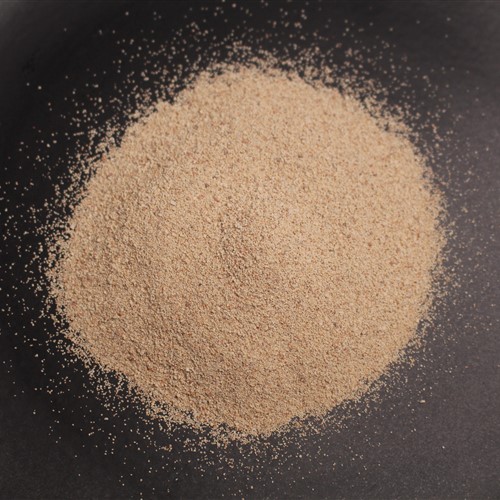
Our reactive silica is produced from naturally mined, high-purity diatomaceous earth with consistently high SiO₂ content and verified amorphous structure. We supply in customised particle sizes based on your rock phosphate composition and fluorine load, and our team can guide you on the correct dosage to maintain the right silica to fluorine ratio for your specific process.
We are ISO certified with over 50 years of manufacturing experience, serving phosphoric acid plants and fertilizer producers across India and globally.
Conclusion: Don't Let Fluorine Corrode Your Profits
Fluorine corrosion in phosphoric acid plants is a well-understood problem with a proven, cost-effective solution. Reactive silica comes from a high-quality diatomaceous earth source reliably captures free fluorine, converts it into fluosilicic acid, and prevents the chain of damage that uncontrolled HF causes in your plant. The key is ensuring you are sourcing the right quality of reactive silica, in the right quantity, from a supplier who understands the process. A reactive silica deficiency is not something you notice until the damage is already done.
If your rock phosphate feed is silica-deficient or if you are currently experiencing unexplained corrosion issues in your plant then,Get in touch with Seema Minerals & Metals today. Share your rock phosphate composition with us and our team will recommend the ideal reactive silica grade and dosage for your specific plant requirements.