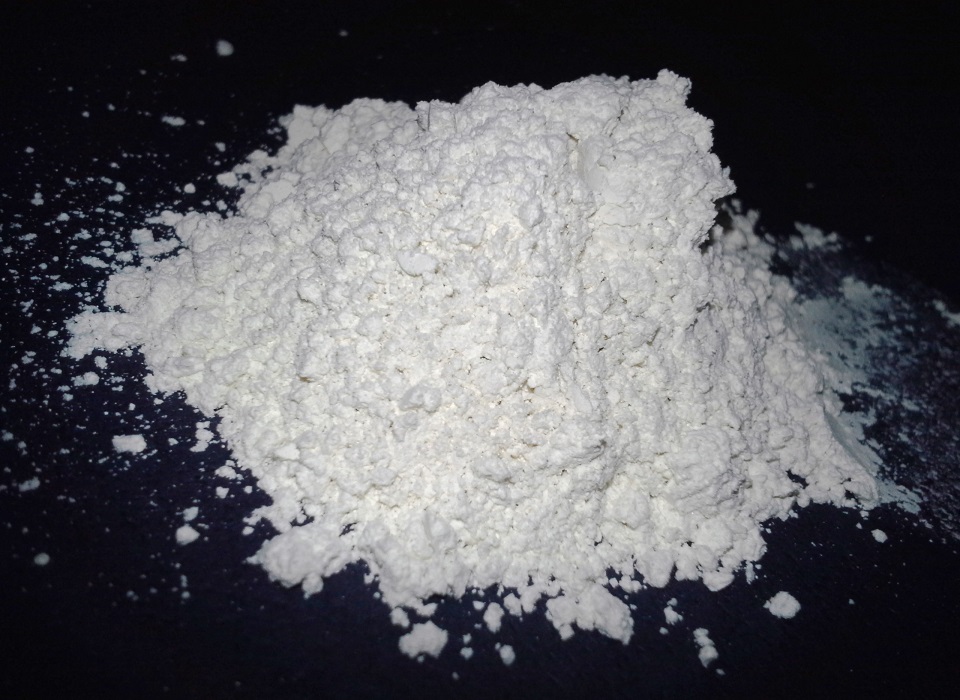



How Diatomite Kieselguhr Removes Heavy Metals and Suspended Solids

Fluorine in Phosphoric Acid Plants Is a Bigger Problem Than Most People Admit
June 9, 2026
How to Verify a Cosmetic Clay Supplier’s Lab Reports Before Placing a Bulk Order
July 21, 2026Heavy metals and suspended solids are not edge cases in industrial water treatment; they are everyday problems. Lead, arsenic, silt, organic debris show up in municipal plants, breweries, effluent systems, and chemical facilities without warning. When your filter media fails to catch them, the consequences are immediate. Discharge limits get breached, product batches get rejected, and regulators ask uncomfortable questions. What experienced plant operators know is that sourcing from reliable diatomite kieselguhr manufacturers like Seema Minerals often fixes problems that equipment upgrades never quite manage to solve.
What Diatomite Kieselguhr Manufacturers Supply and Why Quality Varies
Diatomite commonly called kieselguhr is a sedimentary rock made from fossilised algae. Each particle is full of microscopic pores, which gives it a surface area that is genuinely hard to replicate with synthetic alternatives. That pore structure is what does the filtration work not chemistry, just physics.
Here is the part buyers often underestimate: diatomite quality varies considerably depending on ore source, calcination method, and milling consistency. Two bags labelled the same grade can behave very differently under pressure. Poor-quality material cracks during filtration cycles, releasing trapped contaminants back into the filtrate which is exactly the opposite of what you are paying for. Seema Minerals processes its diatomite from extraction through to finished graded product under controlled conditions, so what you order is what you consistently get.
How the Filter Cake Traps Heavy Metals
Heavy metals like lead, chromium, and arsenic rarely move through water as clean dissolved ions. They tend to travel as colloidal particles, small charged clusters that stick to surfaces when contact is made. Diatomite gives them plenty of surfaces to stick to. As fluid passes through the precoat layer, metal-bearing particles get adsorbed onto the diatomite matrix or physically blocked within the pore channels.
The filter cake that accumulates during operation is not just a passive barrier. It actively traps material with each pass. When the pressure differential across the cake climbs too high, you replace or recoat the diatomite. The spent material carries the contamination away straightforwardly, no chemical treatment needed.
Suspended Solids Removal Across Different Applications
Suspended solids work differently from dissolved metals, but diatomite handles both through the same mechanism. Silt, yeast cells, organic matter, and microbial debris all have to navigate the same irregular pore network. Anything above a threshold size does not make it through. The fluid gets clarified; the solids stay behind in the cake.
Breweries use diatomite to remove haze-forming proteins without stripping flavour. Edible oil refineries use it after bleaching to clarify process streams. Municipal water plants use it as a precoat filter before chlorination. Mining operations use it to process water carrying suspended metals before discharge. The industries are different; the filtration principle is the same every time.
Choosing the Right Grade This Is Where Most Buyers Go Wrong
Flux-calcined grades have higher permeability and suit high-flow applications where coarser solid removal is acceptable. Natural or lower-calcined grades retain more pore complexity and perform better when the job involves fine particulate or heavy metal adsorption. Ordering the wrong grade usually the cheaper one means either poor clarity or a pressure drop that kills your flow rate.
Seema Minerals works with customers to match grade to actual process conditions: inlet quality, target turbidity, operating pressure, and cycle length. It is a more specific conversation than most suppliers bother having, but it is the reason their customers get repeatable results rather than inconsistent ones.
Why Plant Operators Keep Coming Back to Seema Minerals
Seema Minerals operates out of Rajasthan, which sits on some of India's best diatomite deposits. That means direct access to quality ore rather than buying through middlemen and hoping the spec holds. Their supply chain is short, their grade specifications are stable, and they supply both domestic industrial buyers and international customers with the volume flexibility that ongoing contracts require. If you need a diatomite that performs the same way every cycle, they are the right conversation to have.
FAQs
- Can diatomite remove all heavy metals from water?
It handles metals in colloidal or particulate form very well. For fully dissolved ionic metals, pairing diatomite with a coagulant first converts them into particles the filter can capture. - How long does a typical filter cycle run?
Depends entirely on solids loading. Low-turbidity applications can run for many hours. High-solids feeds need more frequent recoating. - Is diatomite approved for drinking water use?
Yes water-treatment grades are approved for potable water applications. Seema Minerals supplies the appropriate purity grades on request. - What is the practical difference between flux-calcined and natural diatomite?
Flux-calcined flows faster and suits coarser filtration. Natural grades capture finer particles and are better for heavy metal adsorption jobs. - Does Seema Minerals export internationally?
Yes. They supply international buyers with consistent grades and volume suited to long-term industrial contracts.