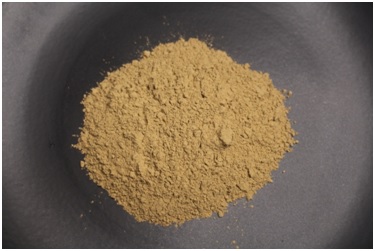



Role of pharmaceutical-grade bentonite clay in modern solid dosage formulations

How to Verify a Cosmetic Clay Supplier’s Lab Reports Before Placing a Bulk Order
July 21, 2026
Diatomaceous Earth as a Natural Deodorant Ingredient: What Cosmetic Brands Should Know
September 8, 2026Nobody writes fan mail about an excipient. Tablet and capsule manufacturers rarely get credit for the raw materials sitting inside their formulations, but those materials are the reason a product works the way it's supposed to. Binders, disintegrants, carriers- all of it doing invisible work. Bentonite clay has quietly earned a spot on that list. Ask around, and formulators who source pharmaceutical grade bentonite clay in India for tablet coatings and suspension bases will tell you the same thing: consistent particle size and swelling behaviour are what make dosing predictable, batch after batch. That's not luck. It's mining, purifying, and testing the clay against standards well above anything a construction or drilling grade would ever face.
Understanding pharmaceutical grade bentonite clay in India
Not all bentonite is created equal. This is where a lot of buyers get tripped up, honestly. Industrial bentonite, the stuff going into drilling fluids or cat litter, is mined and processed for bulk performance. Nobody's checking heavy metal limits on that. Pharmaceutical use runs on a completely different set of priorities: low heavy-metal content, controlled microbial load, tight particle size distribution, traceability from mine to drum. Indian manufacturers built their processing capacity around exactly these requirements, refining raw clay through wet processing, purification, and micronisation until it clears pharmacopoeial limits. What comes out is a fine, off-white powder with predictable swelling and cation exchange behaviour. That predictability is really the whole point once it's inside a tablet press.
Why bentonite clay matters in solid dosage formulations
Bentonite clay is generally used as a binder, disintegrant, or suspending agent, and at times as all three in one product. The fact that it has a layered mineral configuration aids the absorption of water and the swelling process, which assists in breaking the tablet at a controlled rate after ingestion. This property of swelling is utilized in suspensions in order to avoid any sort of sedimentation of the active components throughout the product’s shelf time. However, some formulators depend on the absorptive property of bentonite rather than utilizing its swelling point, since it helps them in absorbing excess moisture.
Bentonite Clay in New Techniques, Chemistries: Individual principles apply to the production of bentonite clay. What has changed are requirements made by manufacturers.
Quality standards for pharmaceutical grade bentonite clay in India
Quality control here isn't one test. It's a chain of them, and skipping a link in that chain is how problems slip through. Loss on drying, swelling index, pH, viscosity, sieve analysis, heavy metal screening, each one tells a formulator something different about how the batch will actually behave on the line. A supplier working to pharmaceutical grade bentonite clay in India specifications tests every incoming lot before it clears for dispatch, and keeps certificates of analysis on file for whenever an audit shows up unannounced. One out-of-spec batch can throw off an entire production run, delay a release, or land you in a conversation with a regulator you really didn't want to have. Consistency across lots, not just within one lot, is what separates a supplier you keep for years from one you quietly drop after a bad batch.
Applications across the pharmaceutical industry
Bentonite doesn't stop at tablets and suspensions. It turns up in topical formulations, cosmeceuticals, even some veterinary products, doing the same adsorptive and rheological work under a different label. Ointment and paste manufacturers lean on it for texture and stability. Nutraceutical companies fold it into mineral supplement blends. It's a genuinely useful material, plain and simple, which is probably why demand for a consistently graded supply keeps climbing steadily instead of spiking and dropping the way trendier ingredients do.
Sourcing pharmaceutical grade bentonite clay in India for reliable supply chains
Sourcing decisions in this category usually come down to three things: documentation, consistency, and lead time. A formulation team that's already validated a process around one supplier's material has zero interest in requalifying a new source every few months because a batch came in slightly different. Working with an established Indian processor tends to shorten the supply chain too, for domestic manufacturers and export buyers alike, since India sits on substantial bentonite reserves and already has the processing infrastructure to refine it to pharmacopoeial grade without leaning on imports.
Why Choose Seema Minerals
Here's the honest pitch. Seema Minerals processes and supplies bentonite clay to pharmaceutical-grade specifications, backed by batch-wise testing and documentation that formulation teams can actually use during an audit, not paperwork that just looks good sitting in a file. We work directly with manufacturers to understand the particle size and purity requirements specific to their process making pharmaceutical grade bentonite clay in India available with specifications aligned to their actual production needs, instead of pushing one generic grade at everyone who calls. If your line has already been burned by inconsistent lots, that's usually the first problem we get asked to fix, and it's the one we take most seriously.
Where this leaves formulators
Bentonite clay was never meant to be a glamorous substance, and that is good. From binding to disintegration and suspension stability in solid dosage formulations, bentonite clay performs the kind of invisible but important work that influences whether the product works when put on sale the same way it did during the testing process. A supplier that considers quality and documentation to be an essential requirement, rather than just something required before shipment, is almost always the one responsible for a successful production run versus the lot that requires an explanation for the regulatory body.
Frequently asked questions
1What makes bentonite clay pharmaceutical grade rather than industrial grade?
Pharmaceutical grade bentonite is processed and tested for low heavy-metal content, controlled microbial limits, and tight particle size distribution. Industrial grades are optimised for bulk performance and cost, not purity.
2What role does bentonite clay play in tablet formulations?
It commonly acts as a binder and disintegrant, holding tablet ingredients together during compression while letting the tablet break apart at a controlled rate after ingestion.
3Is Indian-sourced bentonite clay suitable for export-grade pharmaceutical products?
Yes, as long as the supplier processes and tests it against recognised pharmacopoeial standards and can hand over complete batch documentation for regulatory review.
4How is bentonite clay used in liquid suspensions?
Its swelling and viscosity-building properties keep suspended active ingredients evenly dispersed, so they settle out more slowly over the product's shelf life.
5What should a formulation team check before finalising a bentonite supplier?
Certificates of analysis, batch-to-batch consistency, heavy metal and microbial test results, and whether the supplier can hold that consistency over time, not just on the first order.